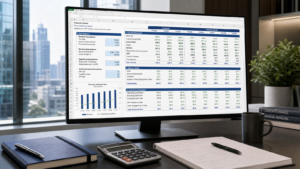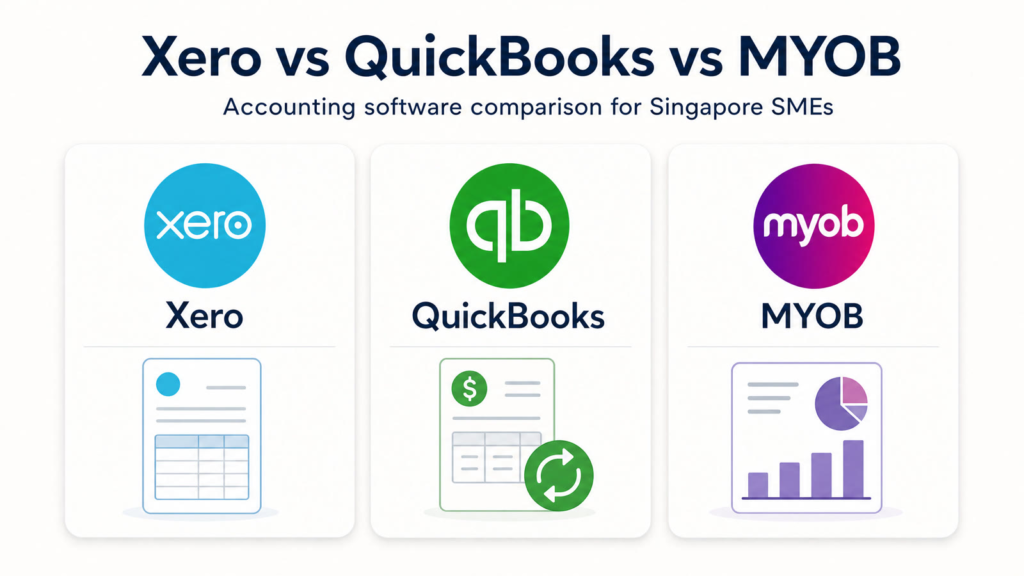
Picking accounting software feels like it should be a quick decision, and then you’re three years in, your data is a mess, and switching feels harder than sticking with something that never quite fit. Choosing accounting software Singapore businesses can grow into, rather than outgrow within a year, is worth spending a bit more time on upfront than most founders do.
What to actually weigh before choosing accounting software Singapore businesses will rely on daily
Before comparing specific platforms, get clear on what matters for your business:
- Do you need multi-currency support, because you invoice or pay overseas?
- Do you need built-in payroll, or are you outsourcing that separately?
- How important is integration with other tools you already use, e-commerce platforms, POS systems, HR software?
- Will your accountant or outsourced bookkeeper need direct access, and does the platform support that cleanly?
- Are you likely to need GST-compliant invoicing as IRAS requirements evolve, including InvoiceNow readiness?
Xero
Xero is widely used among Singapore SMEs and professional service firms, largely because of its clean interface and strong ecosystem of add-on integrations, payment gateways, inventory tools, industry-specific apps. It handles multi-currency well and is generally considered easier for non-accountants to navigate day to day.
Where it’s weaker: out-of-the-box payroll for Singapore isn’t as built-in as some competitors, so many businesses run a separate payroll tool alongside it. Reporting customisation, while solid, sometimes needs third-party add-ons for genuinely advanced management reporting.
QuickBooks
QuickBooks Online has a strong global user base and solid core accounting functionality, with reasonably good reporting and a large ecosystem of accountants familiar with the platform. It tends to be a comfortable choice for businesses that value a large support and integration ecosystem.
Where it’s weaker in the Singapore context: some region-specific compliance features, GST reporting formats, IRAS-specific requirements, can lag behind more Singapore-focused platforms, and local support depth varies by provider.
MYOB
MYOB has a long history with Singapore and Southeast Asian SMEs specifically, with accounting features built around local compliance requirements. It’s a reasonable choice for businesses that want a platform with deep regional roots and support for Singapore-specific reporting needs.
Where it’s weaker: the interface and overall user experience are generally considered less modern and less intuitive than Xero, and the third-party integration ecosystem is smaller.
What actually matters more than the software itself
This is the part of choosing accounting software Singapore SMEs often skip, focusing on feature comparisons instead of the things that actually determine whether the switch works out.
Your bookkeeper or accountant’s familiarity with the platform often matters more than the platform’s specific feature list. If your outsourced accounting provider works primarily in Xero, fighting to use a different platform creates friction and cost that outweighs minor feature differences.
Clean setup from day one. The software you choose matters far less than whether your chart of accounts, GST settings, and opening balances are set up correctly at the start. A well-configured “good enough” platform beats a poorly configured “best” platform every time.
Migration cost, if you’re switching. Moving from one platform to another isn’t free: historical data migration, retraining staff, and reconciling the transition period all cost time and sometimes money. Factor this in before switching just because a competitor has one feature you want.
A practical recommendation
For most Singapore SMEs without highly specialised needs, Xero is a reasonable default given its ecosystem and ease of use, but the right answer genuinely depends on your specific requirements, multi-currency, payroll, integrations, and just as importantly, what your accountant or bookkeeping provider already works in. Choosing accounting software Singapore firms will still be happy with three years from now means weighing your provider’s workflow just as heavily as the feature list.
Not sure which platform fits your business?
Talk to Abacuscorp about your specific needs, we work across the major platforms and can help you avoid a costly switch later.