The difference between management accounts vs statutory accounts trips up a lot of business owners, who assume the numbers their accountant produces at year-end are the same numbers they should be using to run the business day to day. They are related, but they are not the same thing, and confusing them is one of the more common reasons SME owners feel like they are flying blind between annual filings.
Statutory accounts: built for compliance
Statutory accounts, also called financial statements, are prepared to satisfy legal and regulatory requirements: filing with the Accounting and Corporate Regulatory Authority (ACRA), supporting your corporate tax filing with IRAS, and meeting Singapore Financial Reporting Standards. They are backward-looking, cover a full financial year, and follow a standardised format so that anyone reading them, an auditor, a bank, or IRAS, can interpret them consistently.
Because they are built for compliance and external reporting, statutory accounts are typically only produced once a year, or once a quarter for some larger companies, and they arrive well after the period they cover. By the time you are looking at your statutory accounts for the year, that year is already over.
Management accounts: built for decisions
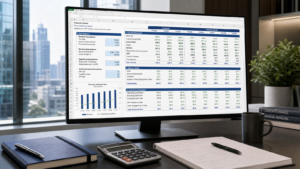
Management accounts are produced for internal use, typically monthly, and are designed to help you actually run the business: are you hitting your margin targets, is cash flow tracking to plan, which product line is actually driving profit. There is no legal requirement to prepare them and no standardised format. They are built around what matters to your specific business.
Because they are internal, management accounts can include things statutory accounts would not, like a segmented profit and loss by product line or client, a rolling cash flow forecast, or KPIs specific to your industry.
Why the distinction actually matters
Timing. If you are only looking at statutory accounts, you are making decisions based on information that is, at best, a year old by the time it is finalised. Management accounts, produced monthly, let you catch problems, a margin slipping, a cash crunch building, while there is still time to act.
Level of detail. Statutory accounts present the business at a level required for compliance. Management accounts can go as deep as you need: by department, by client, by product, in whatever cut actually helps you make a decision.
Audience. Statutory accounts are written for external readers who need standardised, comparable information. Management accounts are written for you and your leadership team, and can use whatever format is most useful, even if that means less formal presentation.
Do you actually need both?
Yes, and they serve different purposes that do not substitute for each other. Statutory accounts are a compliance requirement you cannot skip. Management accounts are optional in the sense that no law requires them, but any business past the earliest startup stage benefits from having some form of regular internal reporting, even if it starts simple. Comparing management accounts vs statutory accounts side by side makes it clear they answer different questions: one tells you whether you complied, the other tells you whether you are actually winning.
A common and sensible progression is:
- Early stage: basic bookkeeping, annual statutory accounts only
- Growth stage: monthly management accounts covering profit and loss, cash position, and a handful of key metrics
- More mature stage: full management dashboard with segmented reporting, forecasts, and board-level reporting drawn from the same underlying data as the statutory accounts
The connection between the two
Good management accounts and clean statutory accounts should reconcile. If your monthly management numbers and your year-end statutory figures are wildly different or hard to reconcile, that is usually a sign of inconsistent bookkeeping practices during the year, which creates more work, and more scope for error, at year-end.
Want monthly numbers you can actually act on?
Talk to Abacuscorp about setting up management accounts that give you a real-time view of the business, alongside the statutory accounts you are already required to file.