XBRL filing Singapore companies must complete is a required part of annual return submission to ACRA for most private Singapore companies – yet many directors only encounter it for the first time when their accountant asks for approval on tagged financial statements.
What XBRL is
XBRL stands for eXtensible Business Reporting Language. It is a standardised, machine-readable format for financial data. When your accountant files your financial statements with ACRA in XBRL format, each data point is tagged using a standard taxonomy so regulators can extract and compare data across companies automatically.
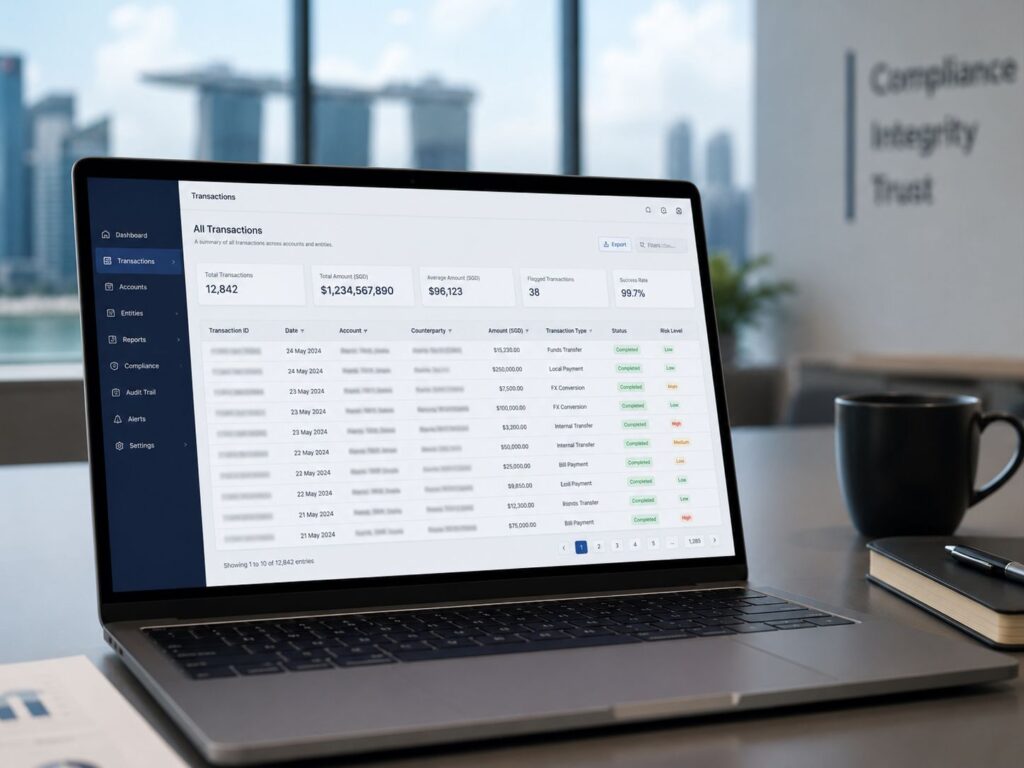
The practical implication: financial statements cannot be submitted as a Word document or PDF alone. They must be in a format that ACRA’s systems can read and validate.
Who needs XBRL filing in Singapore
Full XBRL – required for SGX-listed companies and those with more complex financial structures including subsidiaries.
XBRL with financial highlights – required for most private Singapore companies that prepare a full set of financial statements. This involves tagging around 150–200 key data fields.
Exempt from XBRL – companies preparing simplified financial statements (typically very small companies with minimal activity), unlimited companies, and foreign companies filing a branch return.
The 4-step XBRL filing process
Step 1: Finalise financial statements. XBRL tagging is done on final numbers, not drafts. Year-end accounts must be completed and approved before tagging begins.
Step 2: Tag the financial data. Your accountant maps each financial data point to the corresponding XBRL taxonomy tag. Most professional accounting software automates most of this. ACRA’s Inline XBRL viewer allows review before submission.
Step 3: Validate. The XBRL data is validated against ACRA’s technical requirements. Common errors include missing mandatory fields, incorrect data formats, and mathematical inconsistencies such as assets not equalling liabilities plus equity.
Step 4: Submit with the annual return. The XBRL file is submitted to ACRA through Bizfile+ together with the rest of your annual return, alongside a PDF version of the financial statements.
Common problems that cause delays
Financial statements not finalised on time. The annual return is due within 7 months of financial year end. Delays in accounts preparation push everything out. The annual return late filing penalty can reach S$300 per day. Start early.
Discrepancies between XBRL data and PDF statements. ACRA cross-validates both. Figures that do not match – even due to rounding – result in a rejected submission.
Wrong taxonomy version. ACRA updates the XBRL taxonomy periodically. Reputable firms stay current; outdated versions fail validation.
Missing mandatory fields. Certain XBRL fields are mandatory even when the figure is zero. Leaving them blank causes validation failures.
What you need to do as a director
For most SMEs, XBRL filing is handled entirely by your accountant or corporate services provider. Your role: provide timely information for accounts preparation, review and approve draft financial statements, and sign off on the directors’ statement. Confirm XBRL is included in your accountant’s service fee – some firms charge separately.
Self-filing option
ACRA provides a free BizFinx preparation tool for companies filing financial highlights without specialist software. It requires accounting knowledge to use correctly. The penalty for non-compliance or rejected submissions can be up to S$5,000, so professional preparation is the safer route if you are not comfortable with accounting concepts.
XBRL is one part of your broader accounting and compliance obligations. For a complete picture of what accounting services Singapore companies need – from bookkeeping through to statutory filing – see our accounting services Singapore guide.
Abacus handles XBRL filing as part of our annual statutory accounts and corporate secretarial service. Get in touch if this is your first annual return or if you are unsure whether your current firm is handling it correctly.