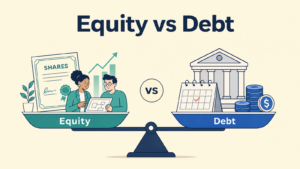
An outsourced bookkeeper Singapore businesses hire typically costs between S$300 and S$1,200 a month – compared to S$45,000–S$70,000 a year fully loaded for an in-house hire. That gap is the starting point for this decision, but it’s not the whole story.
What in-house bookkeeping actually costs
Fully loaded, not just salary:
| Component | Typical cost |
|---|---|
| Salary (3–5 years’ experience) | S$2,800 – S$4,200/month |
| Employer CPF (17%) | S$476 – S$714/month |
| AWS / bonus | ~1 month salary/year |
| Medical and benefits | S$200 – S$400/month |
| Recruitment (once-off) | S$3,000 – S$8,000 |
| Training and software | S$500 – S$1,500/year |
| Total annual cost | S$45,000 – S$70,000 |
That’s the real number – not the salary line. The gap between in-house and outsourced is typically S$30,000–S$50,000 per year for a small to mid-size business.
What an outsourced bookkeeper in Singapore costs
| Business size | Monthly fee |
|---|---|
| Small (< 50 transactions/month) | S$300 – S$600 |
| Medium (50–200 transactions/month) | S$600 – S$1,200 |
| Larger (200–500 transactions/month) | S$1,200 – S$2,500 |
| Complex or multi-entity | From S$2,500 |
Annual cost for most SMEs: S$4,000–S$20,000. Per Enterprise Singapore, managing operational costs efficiently is one of the top priorities for growing SMEs – and bookkeeping is one of the clearest areas to optimise.
What you get with each option
In-house bookkeeper: available during business hours for ad-hoc queries, knows your business deeply over time, can physically manage paperwork and petty cash, full attention on your business only.
Outsourced accounting firm: multiple qualified professionals reviewing your work (less single point of failure), stays current on IRAS and ACRA requirements across many clients, typically covers bookkeeping, GST, tax, and secretarial under one roof, and no HR issues or resignation risk.
The quality question
Founders often assume in-house is higher quality. That’s not always true. A junior bookkeeper hired for S$3,000 a month might make errors that an experienced firm would catch in their review process. Professional firms have internal quality control – a senior accountant reviews work before it reaches the client. A lone in-house hire doesn’t have that check.
When in-house makes sense
High transaction volume: once you’re processing hundreds of transactions a week, outsourcing becomes more expensive and having someone on-site makes sense. Operational integration also matters – if bookkeeping is deeply tied to managing stock, processing orders, or handling cash in person. Above S$8–10 million revenue, the in-house cost typically becomes justified.
When outsourcing makes sense
Below S$5 million revenue, the economics clearly favour outsourcing. Variable businesses benefit from pricing that scales with activity. And if you want bookkeeping, GST, corporate secretarial, and tax all managed by one team, outsourcing to a full-service firm is cleaner than coordinating in-house with multiple external parties.
The hybrid model
Some businesses use both: a part-time in-house bookkeeper for daily operational tasks and receipt management, with a professional firm handling month-end accounts, tax, and statutory filings. This works when roles are clearly delineated. The failure mode is overlap – two sets of numbers that don’t reconcile.
For a complete overview of accounting and bookkeeping obligations for Singapore companies, including what’s legally required and how to choose the right firm, see our accounting services Singapore guide.
Talk to Abacus if you want an honest assessment of what your bookkeeping should cost and how it should be structured.